SKAI for forwarders
You file declarations for principals. SKAI reads the documents, checks the fields and files, so your declarant gives the approval instead of retyping.
What the desk needs
You work with changing principals, and with invoices, packing lists and bills of lading that rarely say the same thing. Time goes to retyping, chasing missing papers and looking up status in DMS, Portbase and the terminal. The exception decides whether the day closes, not the routine declaration.
What SKAI does for you
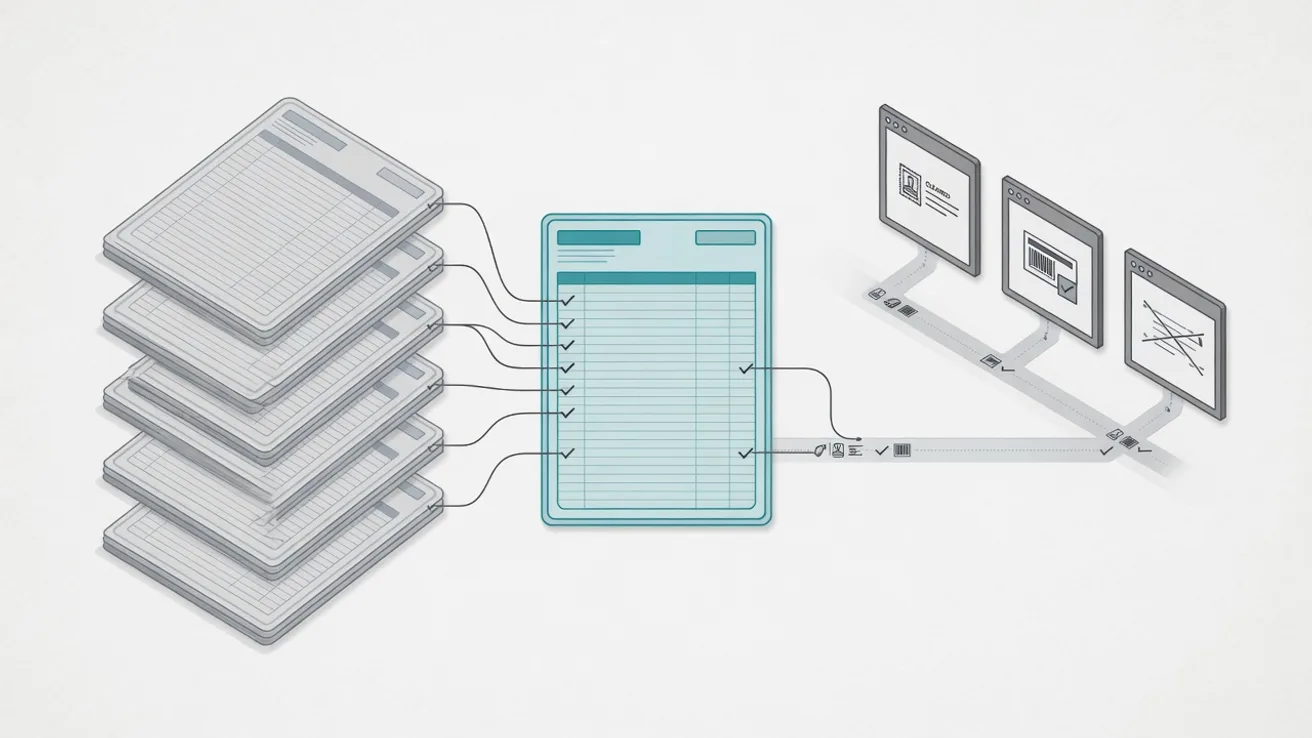
SKAI reads the documents and puts the values into the declaration. Every field carries a source label back to the document. The goods code is checked against the Dutch tariff database and TARIC, the VAT number via VIES, the EORI number against the EU register. What does not line up, you see before filing. Then the declaration goes to DMS, NCTS, DECO or TRACES-NT, and the status comes back into the dossier.
Per principal, not by habit
Routing, document flows, goods-code mappings and approval steps sit per client. Invoicing hangs on the dossier, so extra item lines and work outside office hours do not disappear. Under indirect representation you are the declarant. Then it matters whether you can later show what the value and the classification rested on.