Portbase integration
In Rotterdam and Amsterdam an accepted declaration is not enough to get a container off the quay. The terminal looks at the container number, and the container only moves once the MRN has been linked to it in Portbase. SKAI makes that link from the same file the declaration already lives in, so your declarant does not have to open a second system for it.
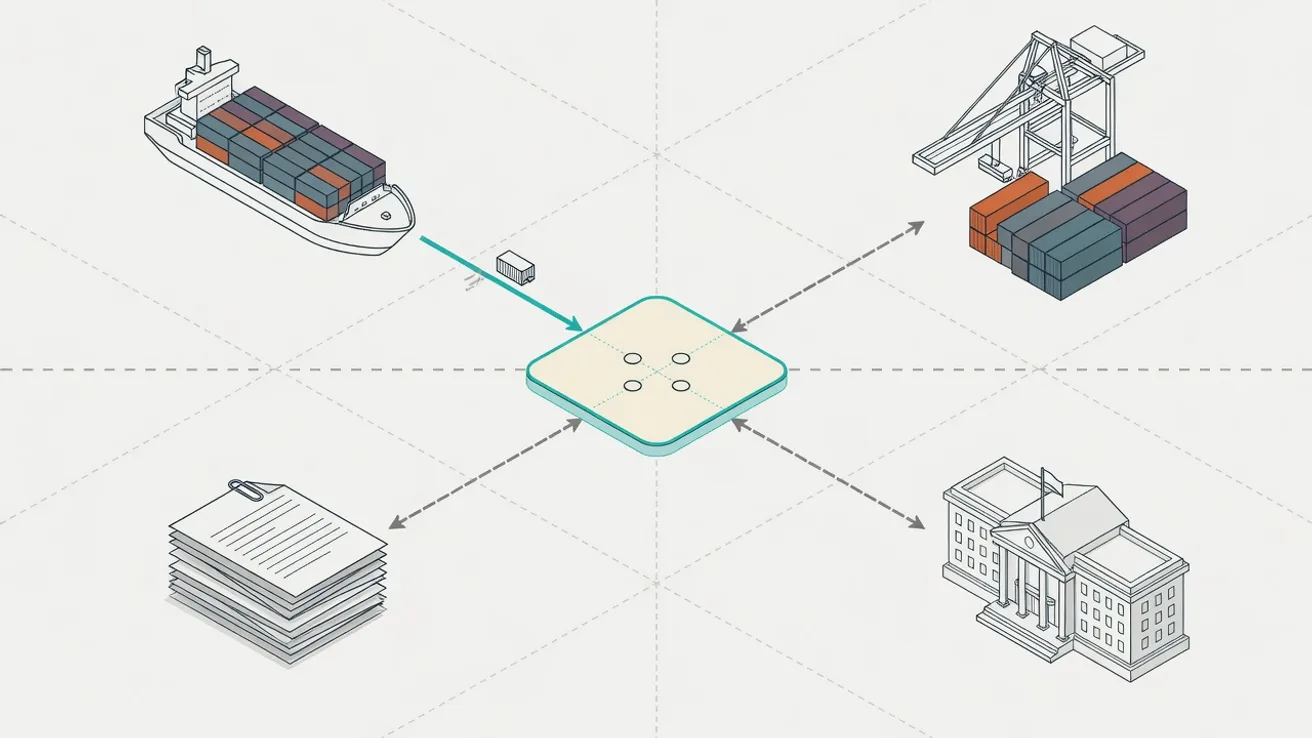
What is a port community system and which parties exchange data through it?
Portbase is the port community system of the Dutch seaports. It is not a customs system and not a terminal system. It is the place where parties that otherwise have no direct relationship look at the same shipment. Carriers and shipping agents report what cargo is coming on board. Terminals report what they have discharged and what is standing on the quay. Forwarders and declarants report which documents belong to which container. Customs reads along and sends its decision back. The awkward part is that every party holds only a piece of the data. The carrier knows the B/L number and the vessel. The terminal knows the container number and the discharge date. You know the MRN and the procedure you declared. Portbase is where those pieces get tied together, and only when they are complete may a container leave the quay. That is also why a problem in the port is rarely one party's problem. It is almost always a piece of data that exists at one party and has not yet arrived at another.
Why is my container standing still when the declaration was accepted long ago?
Because the terminal does not look at your declaration, it looks at the container. An MRN belongs to a declaration, not to a container number. As long as nobody has reported which MRN belongs to which container, the terminal sees a container with no valid onward destination, and it will not hand that container over. Whether the declaration was accepted an hour ago or three days ago makes no difference. Until that moment the container sits in temporary storage at the terminal. A time limit is running, storage charges are running, and detention on the carrier's container is running. That clock keeps ticking while everything in your own system shows green. A declaration covering twenty containers has one MRN, and that single number has to be reported against all twenty container numbers. Split consignments give you the mirror image: cargo in one container under two declarations needs two MRNs, and reporting the wrong one produces a rejection with no obvious cause.
How do the cargo declaration and the arrival process run?
It starts well before arrival. The carrier or the shipping agent files the cargo data before the vessel comes in, so customs knows in advance what is on board. On that basis, temporary storage arises at discharge: the container is registered at the terminal with a B/L number attached, and without a follow-up procedure it goes nowhere. Then it is your turn. You file the declaration in DMS, you get an MRN back, and you report that MRN together with the container number. Only then does the terminal know which onward destination belongs to that container. Customs releases it, or holds it for a scan or a physical inspection, and that outcome comes back along the same route. For export the order reverses. There you pre-notify the containers to the terminal with the export document attached, so the container is allowed onto the quay and can be loaded onto the vessel.
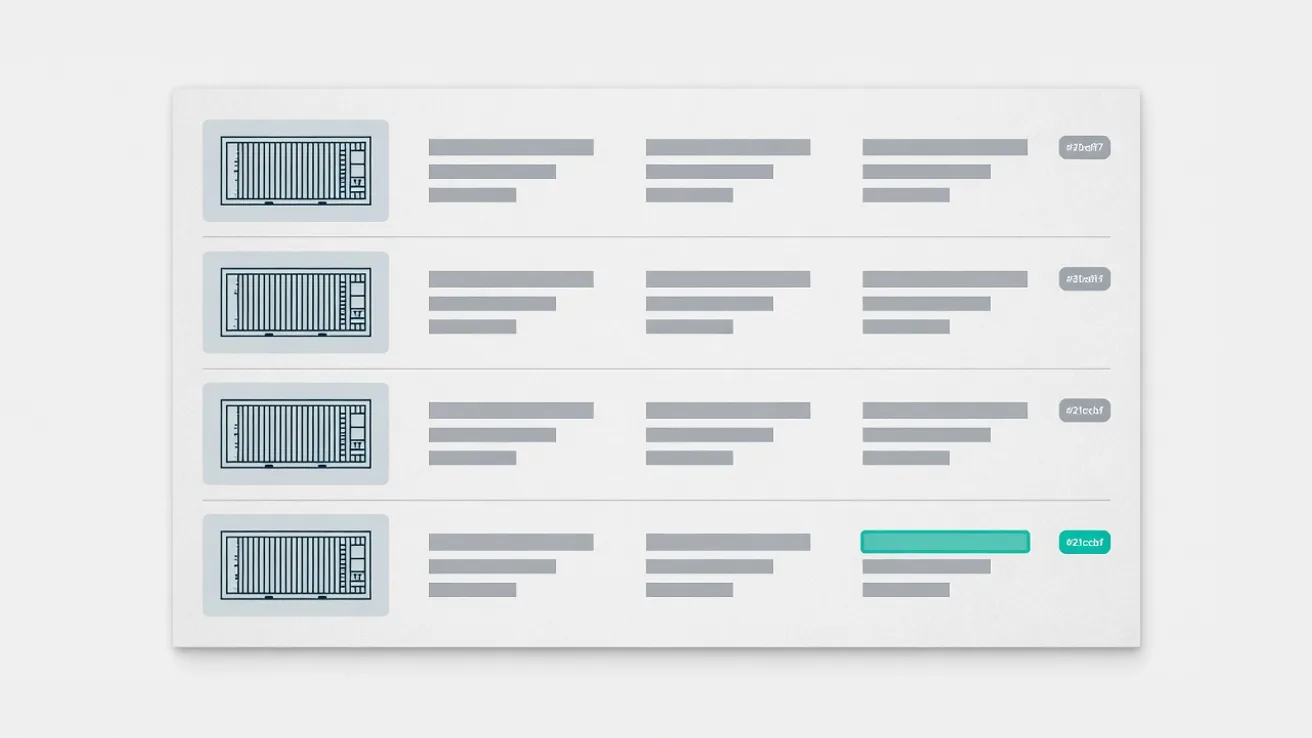
How does SKAI connect to Portbase without you switching systems?
SKAI pulls and pushes. Pulling means the data that already exists lands in the file: the B/L number, the container numbers, the vessel, the expected arrival and the discharge status. SKAI compares that with what your invoice, packing list and bill of lading say, so a container number that does not match stands out before anything is reported. Pushing means SKAI reports the MRN and the matching document data from the file as soon as the declaration is accepted. Your declarant does not have to open a portal or retype a number for it. The response lands in the same place: released, held for inspection, or not yet complete. Alongside Portbase, SKAI connects to the Rotterdam terminals themselves, including ECT Delta, Euromax, RWG and APM. Through the REST API the same status flows on to your own WMS, TMS or ERP, so planning and customer service can see it without anyone having to phone and ask.
What goes wrong in practice?
Almost never the declaration itself. In most cases the declaration is correct, accepted and carrying an MRN, and the link to the container was simply never made. The container stands, the customer calls, and nobody sees where it stalled, because each system on its own looks fine. The second classic is a container number that is very nearly right. One character copied wrong from a B/L and the notification matches nothing. The third is a shipment that falls between two people: one declarant filed the declaration, the notification belonged to the other, and both assumed it had been done. What these three have in common is that they only become visible when someone goes looking. That is why the status coming back into the file matters more than the notification itself. A file that shows the notification is still outstanding is the difference between half an hour and two days.
Can you handle container cargo without a Portbase connection?
In Rotterdam and Amsterdam, in practice you cannot. The terminals work from the notifications that arrive through the port community system, and without a connection you cannot send them. What remains is outsourcing it to a party that reports on your behalf, which makes you dependent on their turnaround and leaves you unable to see what actually happened. Bulk, breakbulk and air freight work differently, and outside the Netherlands other systems apply. But the moment containers come in through the Dutch seaports, the connection stops being a choice and becomes part of the process. So the practical question is not whether you connect, but who sends the notification and where you can see that it succeeded. If that happens in the same file as the declaration, the step stops falling through the cracks. If it happens in a separate portal, it stays an action someone can forget.