Skip to content

Module

Import

The import module builds the import declaration from your documents and files IMA, STO or ATO in DMS.
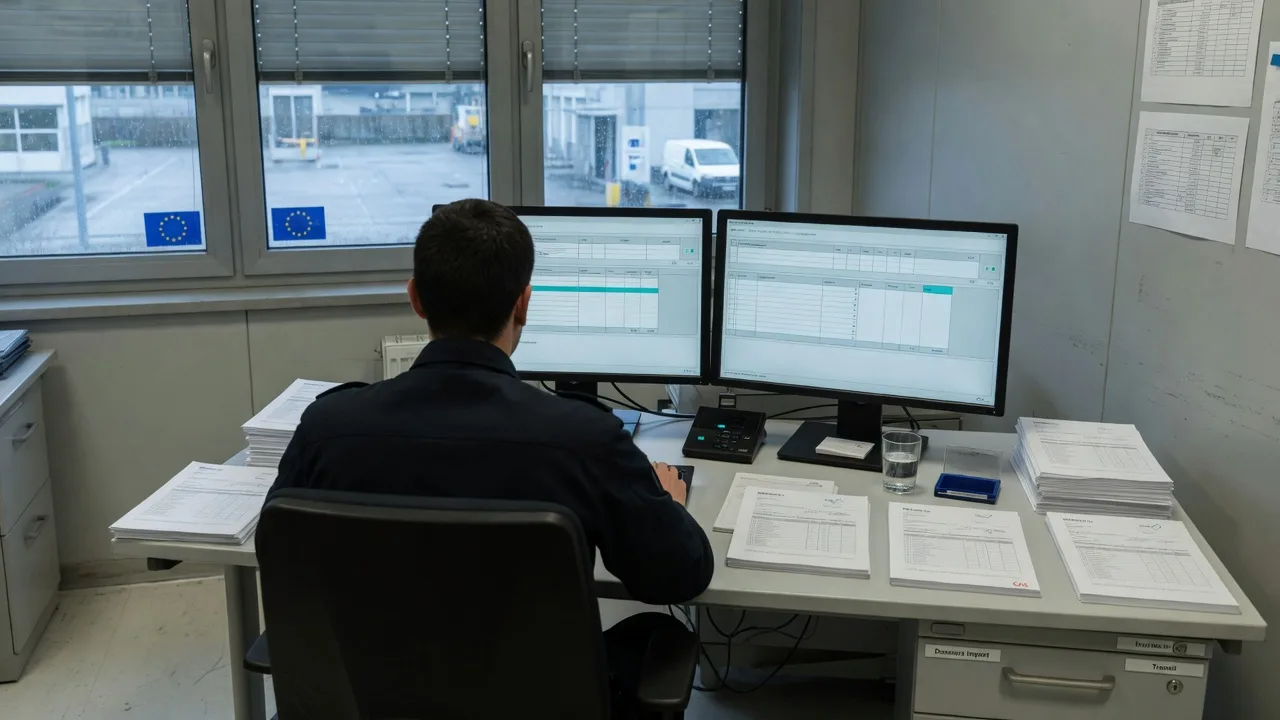
Declarant seen from behind, at two screens with import dossiers and stacks of documents.

CSI-Fresh, Fidocs and ICL already run on SKAI.

FidocsCSI-FreshICLEGS

Capabilities

Import

Three steps. From documents to a dossier customs will accept.

What it covers

IMA for release for free circulation, STO for placing in a customs warehouse, ATO for entry in the records. E-commerce shipments run through DECO. The form of representation is set per principal.

  • IMA, STO and ATO in DMS
  • E-commerce shipments through DECO
  • Representation set per principal
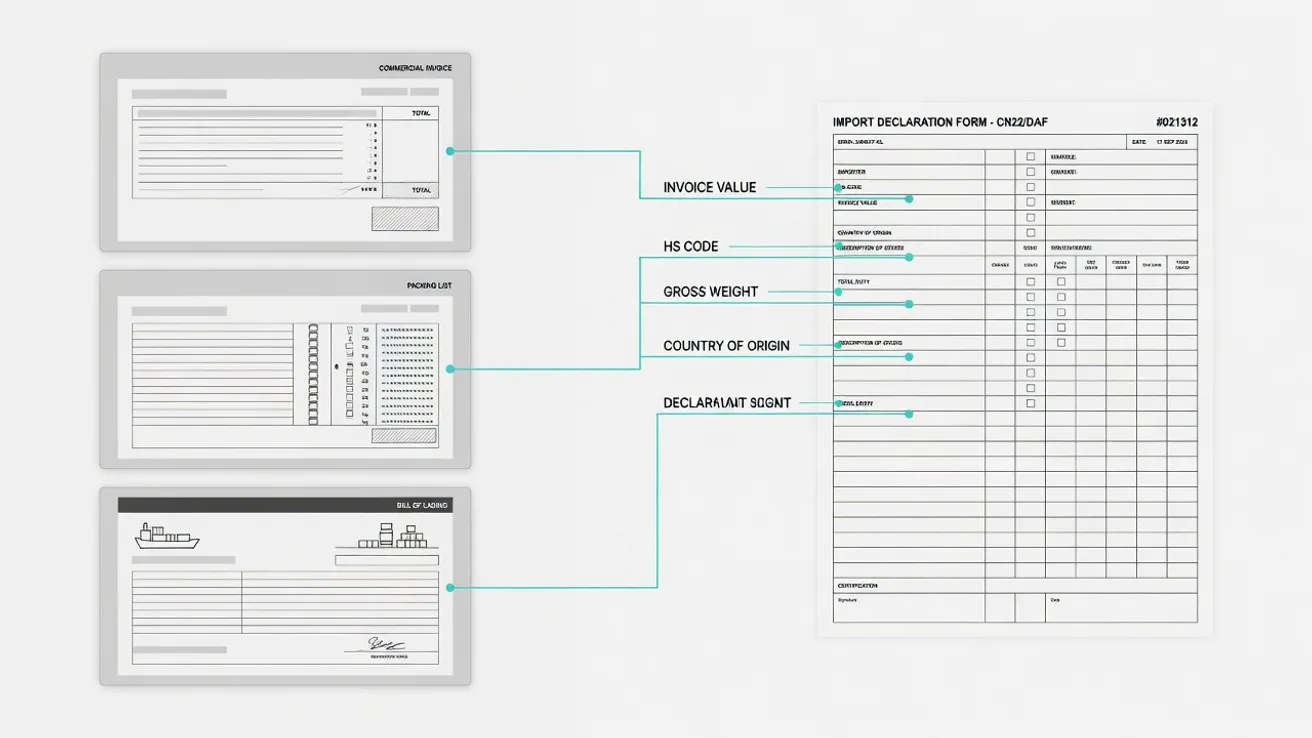
Interface view of an import dossier with lines connecting declaration fields back to the invoice, packing list and bill of lading.

How the declaration is filled

Invoice, packing list and bill of lading are read. Every field gets a source label. SKAI compares the documents on value, weight and quantities. What does not line up sits in the dossier before anything is filed.

  • Invoice, packing list and bill of lading are read
  • Every field gets a source label
  • Mismatches sit in the dossier before filing
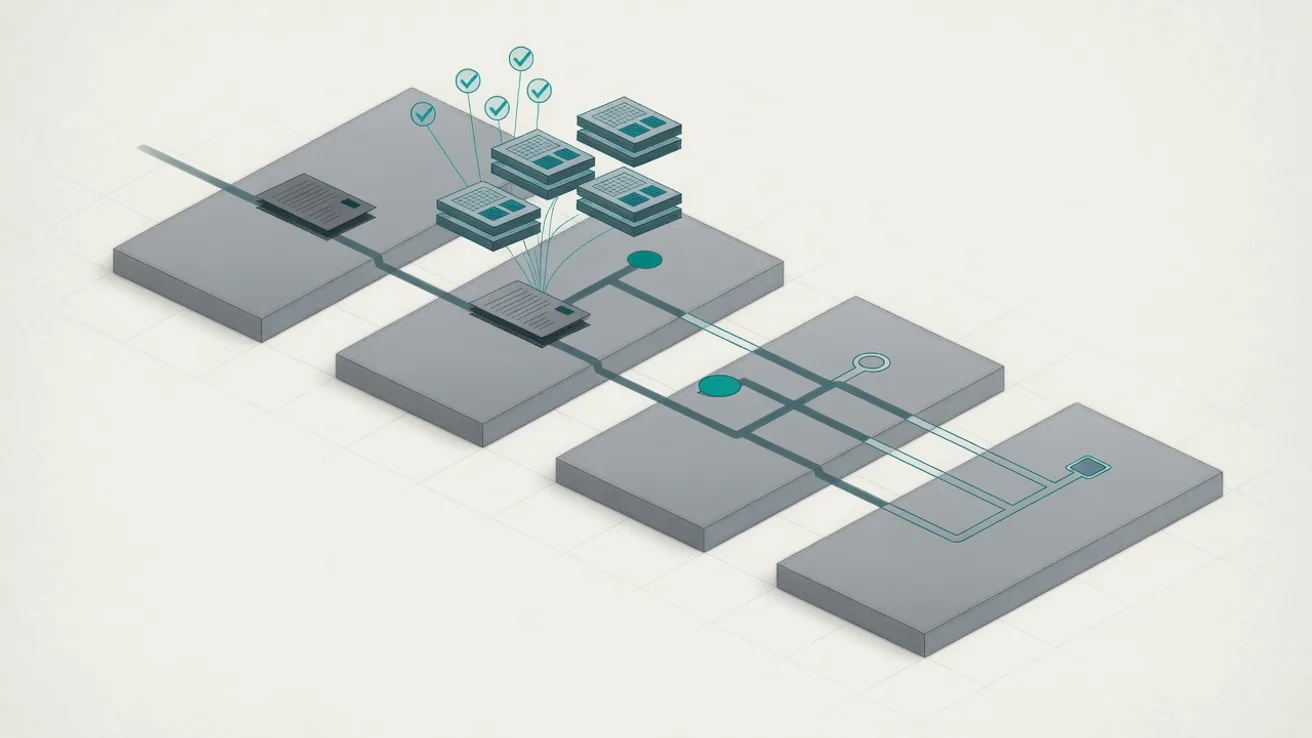
Process diagram showing an import declaration moving through intake, validation and filing, then splitting into release, document check and physical check.

Check before filing

The goods code is checked against the Dutch tariff database and TARIC, including measures and required documents. VAT number via VIES, EORI against the EU register. After filing, the MRN and the status (release, document check, physical check) come back into the same dossier.

  • Goods code against the tariff database and TARIC
  • VAT via VIES, EORI against the EU register
  • MRN and status back in the same dossier
  1. 1Goods code against the tariff database and TARIC
  2. 2VAT via VIES, EORI against the EU register
  3. 3MRN and status back in the same dossier

Frequently asked questions

Which declaration types does SKAI file in DMS?
SKAI files IMA, STO and ATO in DMS. IMA is the standard import declaration with the full data set, STO is the declaration for placement in a customs warehouse and ATO is the supplementary declaration used with entry in the records. E-commerce consignments are filed through DECO.
How does SKAI fill an import declaration from the invoice?
SKAI reads the commercial invoice line by line and writes the seller, the buyer, the incoterm, the currency, the amounts and the descriptions into the declaration. The packing list supplies the weights and quantities, the bill of lading the container number and the place of entry. Every field carries a source label back to the document.
Does SKAI check the commodity code against TARIC?
Yes, every commodity code is checked against the national tariff database and EU TARIC, including the measures attached to the code. That goes beyond existence: the duty rate, any preference, anti dumping duty, prohibitions and restrictions and the mandatory document codes are all taken into account. A missing certificate shows up as a flag in the file.
Can I see in SKAI whether a declaration is released or under check?
Yes, the customs status comes back into the file, from acceptance and MRN through to release or a control instruction. On a document check the requested paperwork already sits with the declaration. On a physical check the file stays open until the inspection is closed.
Can SKAI file under an article 23 licence?
Yes, the licence is recorded per client and applied automatically to every declaration that falls under it. Import VAT is then deferred to the periodic VAT return instead of paid at import. SKAI checks that the licence matches the importer's EORI number before filing.
Does SKAI support direct and indirect representation?
Yes, the form of representation is recorded per client and put on the declaration. Under direct representation your client is the declarant, under indirect representation you are, and you carry the customs debt with them. SKAI shows before filing which value and duty amounts that covers.
Can SKAI pull import files from our WMS or ERP?
Yes, SKAI connects to an existing WMS, TMS or ERP over a REST API and also picks up files from mail. Your current systems stay where they are and SKAI sits on top of them as a layer. The declaration and the status updates flow back into the same system.

We run one of your own import dossiers through SKAI, from invoice to filed IMA.

Book a demo